
Itinerary for 6 Days Umbwe
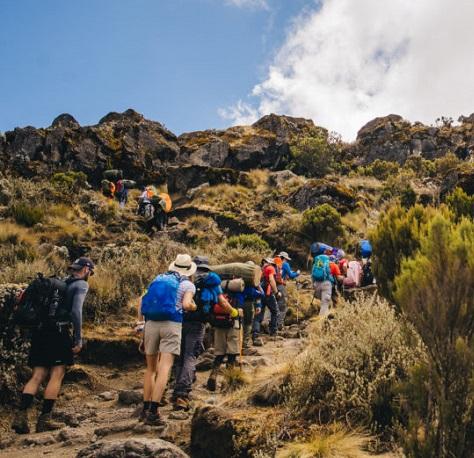
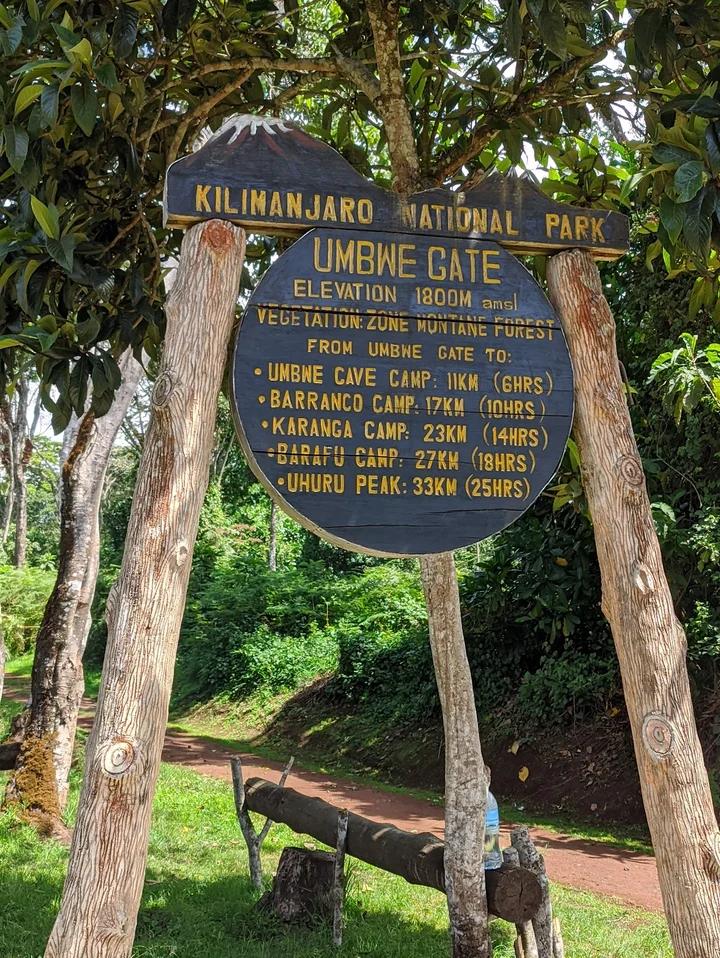
Day 1: Umbwe Gate → Umbwe Cave Camp
- Elevation: 1,400 m → 2,940 m
- Distance / time: ~6 km, 5-7 hours
- Habitat: Montane rainforest
This is the hardest start of any route. From the gate the trail climbs steeply along a narrow forest ridge, over roots and rock, with no gentle warm-up. The forest is dense and quiet, with moss, ferns and giant trees, and you will meet very few other trekkers. Umbwe Cave Camp is small and tucked into the trees, and the first night is cool and damp.
Tips: Go very slowly (pole pole). You gain about 1,500 m on the first day, so save your energy.
Day 2: Umbwe Cave Camp → Barranco Camp
- Elevation: 2,940 m → 3,950 m
- Distance / time: ~7 km, 6-7 hours
- Habitat: Heath and moorland
The forest gives way to heather and open moorland, and you climb a steep, narrow ridge with drops on both sides and big views of Kibo. Higher up, the trail meets the Machame route above the Barranco valley. Barranco Camp sits beneath the Barranco Wall, with giant groundsels around the tents.
Tips: This is the day most people feel the altitude. Drink often and tell your guide about any headache.
Day 3: Barranco Camp → Barranco Wall → Karanga Camp
- Elevation: 3,950 m → 4,200 m (top of wall) → 3,930 m
- Distance / time: ~5 km, 4-5 hours
- Habitat: Alpine desert
The day starts with the Barranco Wall, a ~257 m rock face. It looks intimidating but it is a scramble, not a technical climb: you use your hands in places and follow a clear route. Beyond the top, ridges and valleys lead down to Karanga Camp. It’s a short day with time to rest.
Tips: Keep your daypack light and your poles secured on the wall.
Day 4: Karanga Camp → Barafu Camp
- Elevation: 3,930 m → 4,600 m
- Distance / time: ~4 km, 3-4 hours
- Habitat: Rocky alpine desert
A short, steady climb to Barafu (“ice” in Swahili). The camp is exposed and windy. Eat an early dinner, rest as much as you can, and listen to your guides’ briefing on layers, headlamps, water and snacks. Most groups wake around 11 pm-midnight.
Tips: Prepare your gear before sleeping and keep water bottles from freezing.
Day 5: Barafu Camp → Uhuru Peak → Mweka Camp
- Elevation: 4,600 m → 5,895 m → 3,100 m
- Distance / time: ~17 km, 12-15 hours
- Habitat: Arctic summit zone → rainforest
You set off around midnight by headlamp, climbing scree in extreme cold, often -10 to -20 °C with wind chill. After several hours you reach Stella Point (~5,756 m) on the crater rim as the sky begins to lighten. Another 45-90 minutes along the rim takes you to Uhuru Peak, the highest point in Africa, ideally around sunrise. Then comes a long descent to Mweka Camp in the forest zone.
Tips: Trekking poles help the descent. Keep your phone and camera warm, because batteries die fast.
Day 6: Mweka Camp → Mweka Gate
- Elevation: 3,100 m → 1,640 m
- Distance / time: ~10 km, 3-4 hours
- Habitat: Rainforest
A gentle descent through lush forest, though the trail can be slippery. At Mweka Gate you sign out and collect your summit certificate (green for Stella Point, gold for Uhuru Peak). Your crew celebrates with songs, and you tip them. You then transfer to your hotel for a hot shower and a proper meal.